Monsoon brings relief from the summer heat, but it also creates new challenges for bonsai owners. One of the most common problems during the rainy season is jade bonsai root rot monsoon Pakistan gardeners frequently struggle with. While jade bonsai is known for being hardy and low maintenance, too much moisture can quickly damage its roots and affect the health of the entire plant.
Because jade bonsai is a succulent, it stores water in its leaves and trunk. This means it does not need frequent watering, especially during humid and rainy weather. In this guide, you’ll learn how to prevent root rot, identify warning signs early, improve drainage, and keep your jade bonsai healthy throughout Pakistan’s monsoon season.
Why Jade Bonsai Is at Risk During Pakistan’s Monsoon
Jade bonsai naturally grows in dry environments where rainfall is limited. Its thick leaves and trunk store water for long periods, helping the plant survive drought conditions. However, this same feature makes it vulnerable when exposed to excessive moisture.
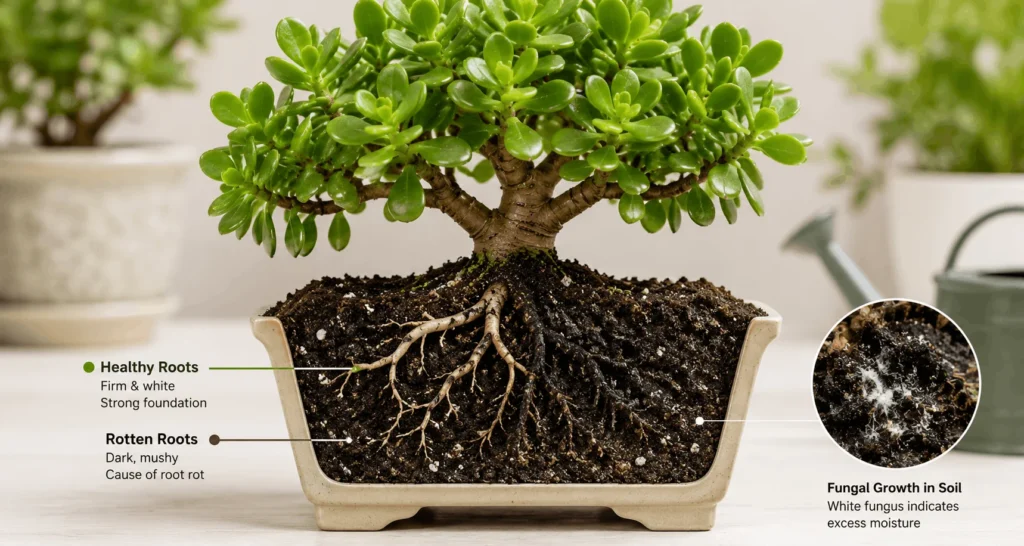
During Pakistan’s monsoon season, continuous rainfall, high humidity, and reduced evaporation keep the soil wet for longer than usual. When roots remain in waterlogged soil, they are unable to absorb oxygen properly. Over time, the roots begin to decay, leading to jade bonsai root rot monsoon Pakistan growers often experience during prolonged rainy periods.
Cities such as Lahore, Karachi, Islamabad, and Rawalpindi commonly experience humid weather and heavy rainfall that can create ideal conditions for root rot if proper care is not taken.
Early Warning Signs of Root Rot in Jade Bonsai
Recognizing problems early can save your bonsai from serious damage. Many root rot signs in jade plants are easy to spot if you inspect your tree regularly.
Yellow or Translucent Leaves
Healthy jade leaves should feel firm and thick. If leaves start turning yellow, become soft, or look slightly transparent, excess moisture may be affecting the roots.
Soft or Mushy Trunk
Gently press the trunk near the base. A healthy trunk feels firm. If it feels soft or spongy, root rot may already be spreading upward through the plant.
Sudden Leaf Drop
Unexpected leaf drop is often one of the earliest jade plant overwatering symptoms. If healthy-looking leaves begin falling without explanation, inspect the roots and soil immediately.
Unpleasant Smell From the Soil
Healthy bonsai soil has little to no odor. A sour, rotten smell coming from the pot usually indicates decaying roots beneath the surface.
Dark or Black Roots
When checking the root system, healthy roots appear light-colored and firm. Rotten roots become dark, mushy, and fragile.
How to Protect Your Jade Bonsai Before Monsoon Hits
A few preventive measures before the rainy season can significantly reduce the risk of root rot.
Check Your Soil Drainage
Good drainage is the foundation of healthy jade bonsai care. If water remains on the soil surface for several minutes after watering, your soil may be too compact.
A simple test is to pour water into the pot and observe how quickly it drains. If the soil behaves like mud instead of allowing water to flow freely, it needs improvement.
Move to a Covered Area
One of the simplest answers to how to protect bonsai from rain is to provide shelter. Move your bonsai under a covered balcony, patio, rooftop shade, or any area where direct rainfall cannot reach the pot.
The plant should still receive bright light and good airflow while remaining protected from continuous rain.
Adjust Your Watering Schedule
Many owners continue watering on a fixed schedule even during rainy weather. This is one of the biggest mistakes.
Proper bonsai watering monsoon Pakistan care requires flexibility. Before watering, insert your finger about one inch into the soil. If the soil feels even slightly damp, wait several more days.
During weeks of heavy rainfall, your jade bonsai may not need additional watering at all.
Elevate the Pot
Place your bonsai pot on bricks, a stand, or pot feet. Elevating the pot prevents water from collecting underneath and improves airflow around the drainage holes.
Also check regularly to ensure drainage holes are not blocked by soil, roots, or debris.
Best Soil Mix for Jade Bonsai in Monsoon
The right soil mix is your strongest defense against root rot.
Heavy garden soil tends to retain moisture for long periods, making it unsuitable for jade bonsai during the rainy season. Instead, use a well-draining mix that allows excess water to leave the pot quickly.
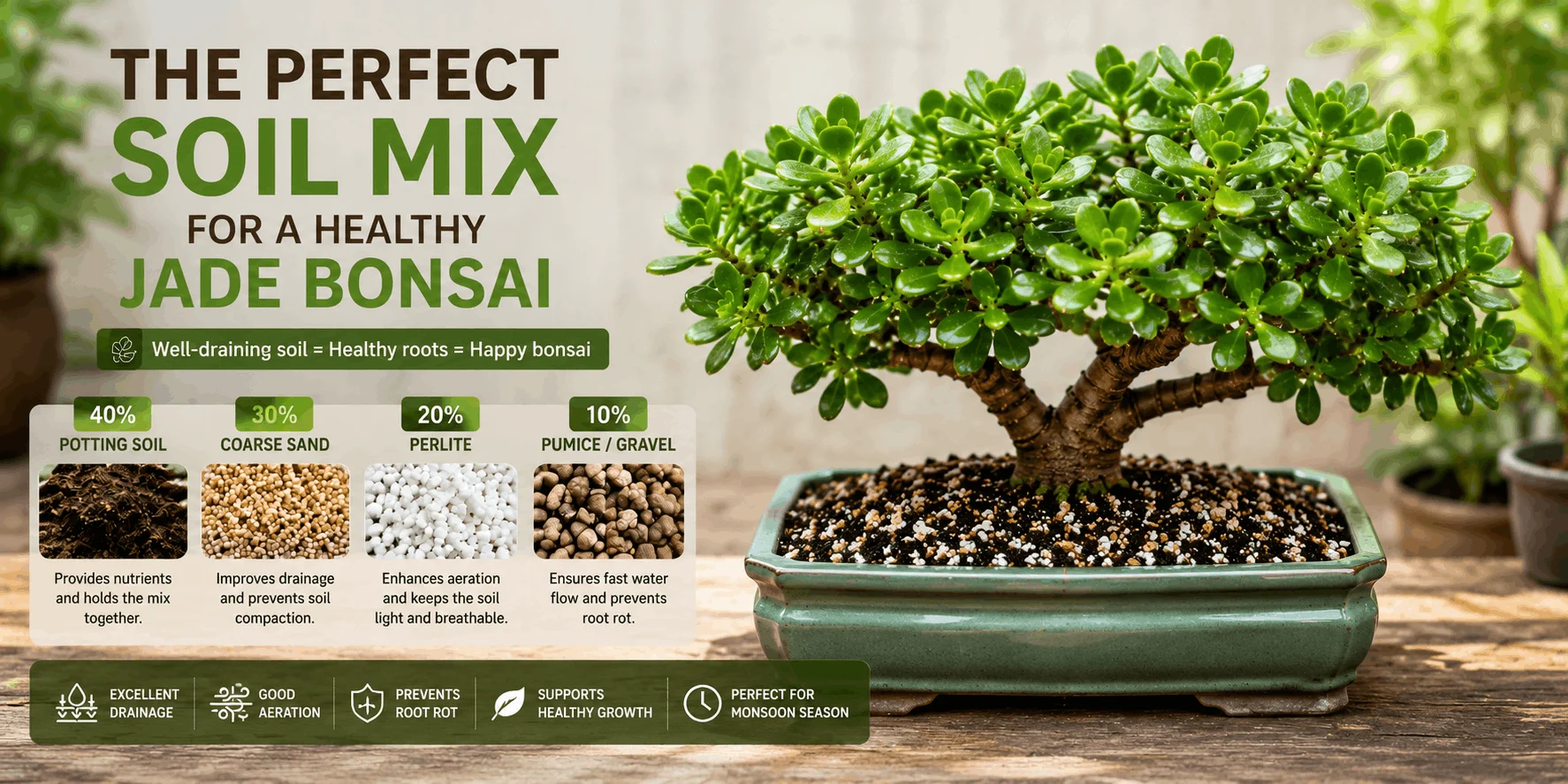
A simple soil mix for monsoon conditions includes:
- 40% quality potting soil
- 30% coarse sand
- 30% perlite, pumice, or gravel
This combination improves drainage while still providing enough support and nutrients for healthy growth.
Using a proper soil mix is one of the most effective ways to prevent jade bonsai root rot monsoon Pakistan conditions often trigger.
What to Do If Your Jade Bonsai Already Shows Root Rot
If your bonsai already displays symptoms of root rot, quick action can often save it.
Step 1: Remove the Plant From the Pot
Carefully remove the bonsai and gently shake off the old soil so you can inspect the roots.
Step 2: Trim Damaged Roots
Using clean, sharp scissors, remove all dark, mushy, or foul-smelling roots. Only healthy roots should remain.
Step 3: Allow the Roots to Dry
Place the plant in a shaded, airy location for 24 hours. This allows cut surfaces to dry and reduces the risk of further infection.
Step 4: Repot in Fresh Soil
Use a fresh, well-draining soil mix and repot the bonsai. Avoid watering immediately. Wait three to four days before providing a light watering.
This recovery method often helps jade bonsai regain strength and develop healthy new roots.
Monsoon Care Checklist for Jade Bonsai Owners in Pakistan
Use this quick checklist throughout the rainy season:
 Check soil drainage regularly
Keep the bonsai in a sheltered location
Reduce watering frequency
Elevate the pot above ground level
Inspect leaves and trunk weekly
Ensure drainage holes remain clear
Watch for jade plant yellow leaves after rain
Improve airflow around the plant
Following these simple steps greatly improves jade bonsai care during the rainy season and reduces the chances of root problems.
How to Help Jade Bonsai Recover After Monsoon Season
Once the rainy season ends, your bonsai will gradually return to active growth.
Begin increasing sunlight exposure as weather conditions improve. Resume a normal watering schedule only when the soil dries appropriately between waterings.
Wait until new growth appears before applying fertilizer. A diluted liquid fertilizer can help support healthy recovery and encourage fresh foliage.
Remove any dead leaves or damaged branches so the plant can focus its energy on healthy growth.
With proper succulent care during Pakistan’s rainy season, most jade bonsai recover quickly and continue growing successfully.
Frequently Asked Questions
Can jade bonsai stay outside during monsoon in Pakistan?
Yes, but it should be protected from continuous rainfall. A covered outdoor location with good airflow is ideal.
How long does root rot take to develop?
In poorly draining soil, root rot can begin within a week of continuous wet conditions.
Can an overwatered jade bonsai be saved?
Yes. If detected early, removing rotten roots and repotting into fresh, well-draining soil can save the plant.
Does humidity alone cause root rot?
Humidity contributes to slower drying, but root rot usually develops when excess moisture remains around the roots for extended periods.
Conclusion – Keep Your Jade Bonsai Thriving This Monsoon
Preventing jade bonsai root rot monsoon Pakistan gardeners commonly face is easier than treating it later. By improving drainage, reducing watering, protecting the plant from heavy rain, and checking regularly for warning signs, you can keep your jade bonsai healthy throughout the season.
A little extra attention during monsoon goes a long way. With the right care, your jade bonsai can survive the rainy months and continue growing beautifully for years to come.
Looking for a healthy, well-established jade bonsai? Browse our Jade Bonsai Collection and find quality plants that are well suited to Pakistan’s clima